The five grim pillers of insecurity applicable to Nigeria: Guns, Drugs, Forests, Motorcycles, and Corruption came sharply to light during a recent workshop on insecurity as it impacts humanity.
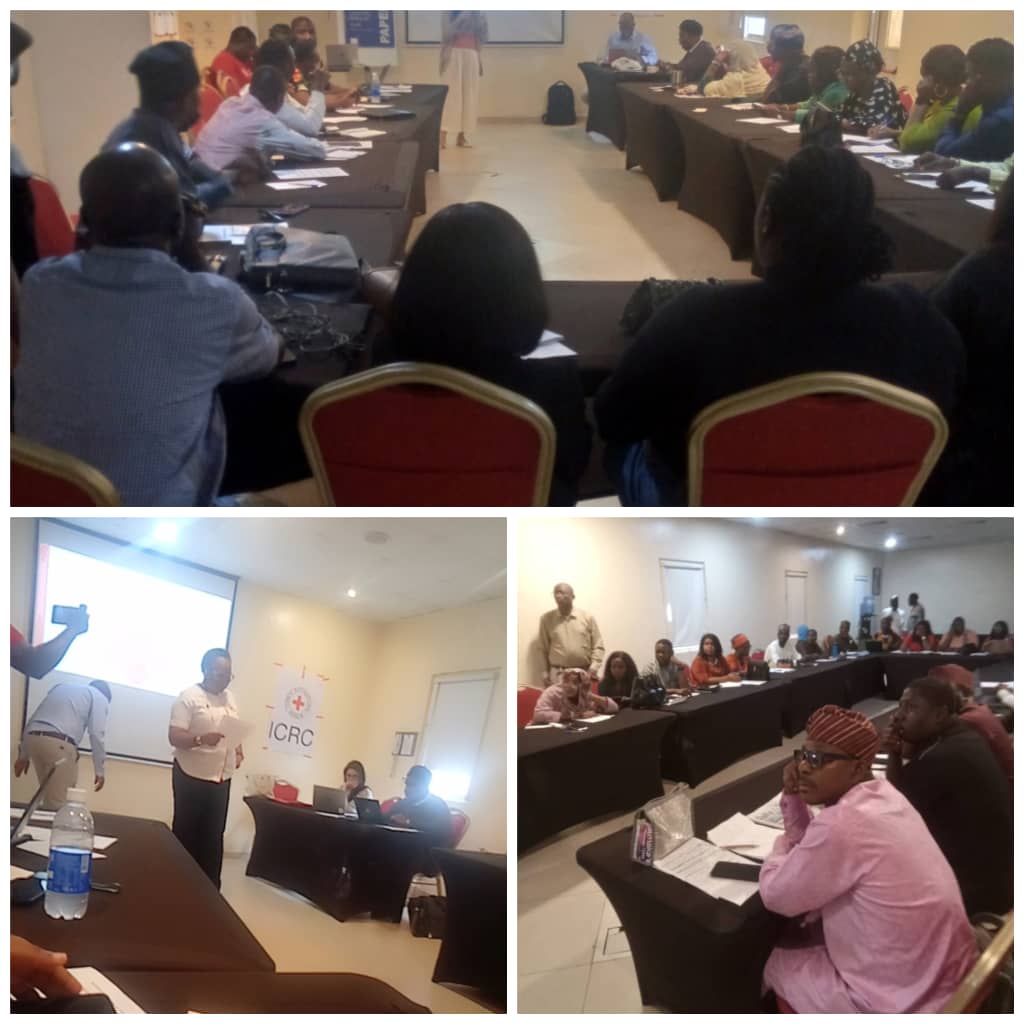
The workshop, a two-day training on Humanitarian Reporting, held in Lagos to sharpen humanity in news and features writing, was organised by the International Committee of the Red Cross (ICRC) in collaboration with the Lagos office of the Nigeria Red Cross Society.
It featured resource persons and facilitators who know their field and know how to deliver the knowledge, including Dr Bala Muhammad of the Mass Communication Department of Bayero University, Kano.
Dr Bala Muhammed, identifying those five pillers, stressed urgent need to address them not with the usual lethargy but with the radicality that Nigeria’s worsening insecurity deserves.
He dwelt on the need for relevant authorities to strictly enforce ban on importation of guns, motorcycles and illegal drugs as a way to cripple the activities of insurgents and other elements causing insecurity around the country.
He emphasized need to clear or burn all forests and to tame corruption around security institutions.
At the workshop attended by journalists selected from across media platforms from around the country, Bala Muhammed expressed the confidence that tackling those five ‘Pillers of Insecurity’ would break the back of insecurity in Nigeria.
“Guns make them bold, Drugs make them reckless, Forests hide them, Motorcycles give them mobility, Corruption fuel their impunity,” he said of the insurgents and bandits.
His presentation called to mind how, more than legal channels, guns come into Nigeria through illicit arms trafficking along notoriously porous land borders, smuggling by sea and air, as well as theft from official stockpiles.
It is common knowledge too how anybody involved in any anti-public acts such as insurgency or banditry find their evil courage from drugs; as well as how these elements withdraw to their forests for safety from the law.
Also, bandits or whatever name they are called, typically ride on motorcycles from their hideouts to wherever they fancy to carry out their attacks and retreat, leaning on the portability of motorcycles to ease the movements.
And, of course, corruption fuels insecurity, with names often dropped of involvement of highly placed persons funding attacks or supplying weapons and the like, except that such persons are usually so big they get away with it or the same corruption bugs disrupt any attempt to hold such suspects to account.
Dr Bala Muhammad nonetheless made his point: if Nigeria is serious about returning to tolerable security, it should stop guns and illicit drugs getting into wrong hands, possibly ban importation of motorcycles, rid the forests of the indwelling anti-social elements, and tame corruption once and for all.
The Media Workshop on Humanitarian Reporting in Lagos featured six presentations, including those by Dr Bala Muhammad, ICRC’s Natalie Bekdache and Aliyu Dawobe and other officials of the ICRC; as well as video clips and special remarks on the subject of the workshop.
In a welcome address earlier during the workshop,
the Chairman of the Lagos branch of the Nigeria Red Cross Society (NRCS), Mrs Adebowale Kolawole said the training was timely and deeply relevant to the humanitarian realities that Nigeria faces today.
“The media plays a critical role in shaping public perception and understanding of conflicts, emergencies and humanitarian crises. In an area where misinformation spreads faster than verified facts, the responsibility of journalists becomes even more significant,” she said.
In the closing remark of the event, the Communication Coordinator of ICRC in Nigeria, Natalie Bekdache urged journalists to always bear their training in mind and do their reporting with intent to redeem situations.
She urged journalists to henceforth seek always to give voice to the wandering, shed light on the unseen and present stories with accuracy, empathy and a strong sense of humanity.
Historical and operational accounts of the ICRC given by the facilitators of the Lagos workshop indicated that ICRC’s existence dates back to 1859 when its founder, Henry Dunant encountered suffering of tens of thousands of wounded soldiers left without adequate care after the Battle of Solferino.
His ideas leading from that encounter led to the establishment of what was first named International Committee for Relief to the Wounded, in 1863, which later became the ICRC.
The ICRC which first got into Nigeria during the civil war, 1967-1970, left briefly after the war but returned in 1988 and has operated continually since then, as the ICRC and as its national body, the Nigeria Red Cross Society.
The Lagos workshop facilitators highlighted in their various presentations and remarks that the Red Cross is a neutral body which never takes sides in any conflict; a humanity-focused organisation which works diligently to relieve human suffering; an impartial body which offers relief based on need; and an independent global body offering not-for-profit voluntary services.
The facilitators mentioned ICRC’s activities in Nigeria over the decades, including promoting respect for international humanitarian law, reuniting separated families, encouraging humane treatment for detainees, providing emergency assistance and sustainable livelihoods, improving water supply and shelter, making health care accessible, among others.
By Onimisi Alao